
Why Many AI Vending Machines Fail in Real Operations
2026-05-26
AI Vending Machines Are Growing Fast, but Real Operations Are More Complicated
AI vending machines are becoming increasingly popular in unattended retail because they allow businesses to operate 24/7 with lower labor requirements. Many operators are attracted by the idea of self-service shopping, remote management, and flexible retail deployment.
However, many AI vending projects begin with strong expectations but later struggle with operational problems that are rarely discussed in promotional materials.
In real commercial environments, operators must deal with product recognition accuracy, software costs, machine stability, restocking efficiency, and customer shopping behavior. These factors often determine whether an unattended retail project can operate smoothly long term.
For businesses planning to invest in AI retail equipment, understanding these operational realities is far more important than simply comparing machine appearance or display size.
Recognition Accuracy Matters More Than Most Buyers Expect
One of the most common problems in AI vending is unstable product recognition.
Many AI vending systems perform well when products are displayed in fixed layouts with limited SKU variety. But real retail environments are far less controlled. Customers may pick up products, move items to different shelves, or place products back in random positions before checkout.
This becomes especially difficult when selling beverages, desserts, sandwiches, dairy products, or other products with similar packaging.
Poor recognition performance can lead to:
-
Incorrect transactions
-
Inventory mismatch
-
Refund disputes
-
Customer dissatisfaction
This is why recognition technology directly affects long-term operational stability.
WEIMI AI vending machines use a dual-camera AI recognition system trained with over 30,000 product types. Compared with simpler recognition systems, dual-camera technology improves accuracy when customers interact freely with products inside the machine.
The open-shelf structure also supports flexible product placement without depending on fixed vending slots, making it easier for operators to manage changing SKUs and seasonal products.
Hidden SaaS Fees Can Become a Long-Term Burden
Many businesses focus heavily on machine purchase price while overlooking software operating costs.
In the AI vending industry, some suppliers charge fixed monthly SaaS fees for cloud systems, backend management, AI recognition services, or remote monitoring functions. These recurring expenses may appear manageable with one machine, but they can grow quickly once operators scale to multiple locations.
For unattended retail businesses, long-term operating structure is often more important than initial hardware pricing.
WEIMI does not require fixed monthly SaaS subscriptions. Instead, operators use a lower transaction-based operating model, helping reduce long-term financial pressure while supporting larger machine deployments.
This becomes particularly important for operators planning AI vending networks across hotels, office buildings, campuses, or transportation hubs.
Traditional Vending Machines Still Create Operational Problems
Many businesses move toward AI vending because traditional vending machines have limitations that affect customer experience and operational efficiency.
Traditional coil vending systems often face issues such as:
Product Dispensing Failures
Products may become stuck during delivery, leading to customer complaints and refund requests.
Limited Product Flexibility
Fixed vending slots restrict product size and SKU variety.
Poor Compatibility With Fresh Food
Delicate packaging, bakery products, and fresh meals are not always suitable for drop-style vending systems.
Open-shelf AI vending machines solve many of these problems by allowing customers to freely pick up products instead of relying on mechanical dispensing systems.
This shopping experience feels closer to a modern convenience store while also reducing dispensing failures caused by traditional vending mechanisms.
For operators selling fresh food, beverages, desserts, or convenience products, flexible shelf layouts provide a more practical retail solution.
Remote Management Directly Affects Operational Efficiency
Once operators deploy multiple machines across different locations, backend management becomes one of the most important parts of unattended retail operations.
Without remote management tools, operators may struggle with inefficient restocking, delayed pricing updates, and limited visibility into machine performance.
WEIMI AI vending machines include built-in 4G and Wi-Fi connectivity, allowing operators to remotely manage machines from desktop or mobile devices.
Key remote management functions include:
Real-Time Inventory Monitoring
Operators can track product sales and receive low-stock alerts to improve restocking efficiency.
Remote Price Management
Product pricing can be adjusted remotely without visiting each location.
Advertising Management
The integrated 21.5-inch screen supports promotional video and advertising updates.
Operational Monitoring
The system supports temperature alerts, hardware notifications, and cloud-synced operation records for improved operational transparency.
For growing unattended retail businesses, these management capabilities help reduce manual workload while improving operational control across multiple locations.
Faster US Deployment Is Becoming More Important for Operators
Shipping delays and international logistics problems continue affecting many vending equipment purchases.
For operators trying to launch quickly, waiting months for overseas shipping may delay business expansion plans and revenue generation.
WEIMI currently offers limited AI vending machine inventory from a US warehouse, allowing businesses to avoid customs delays and begin deployment faster through domestic freight delivery.
For operators testing new retail locations or expanding unattended retail programs, faster deployment can create a significant operational advantage.
What Businesses Should Really Look for Before Buying an AI Vending Machine
As AI vending technology becomes more competitive, businesses should evaluate more than machine appearance or basic AI functions.
For long-term unattended retail operations, the most important factors often include:
-
Recognition stability with real retail SKUs
-
Long-term software and operating costs
-
Flexible product management
-
Remote monitoring efficiency
-
Deployment speed and local inventory support
-
Technical support responsiveness
For operators planning multi-location retail expansion, systems designed for stable operation, flexible SKU management, and lower long-term operating costs can provide a more sustainable unattended retail solution.
Why Traditional Vending Machines Struggle With Fresh Food Retail
Why AI Vending Machines Are Becoming a Smart Retail Expansion Tool
Related Article
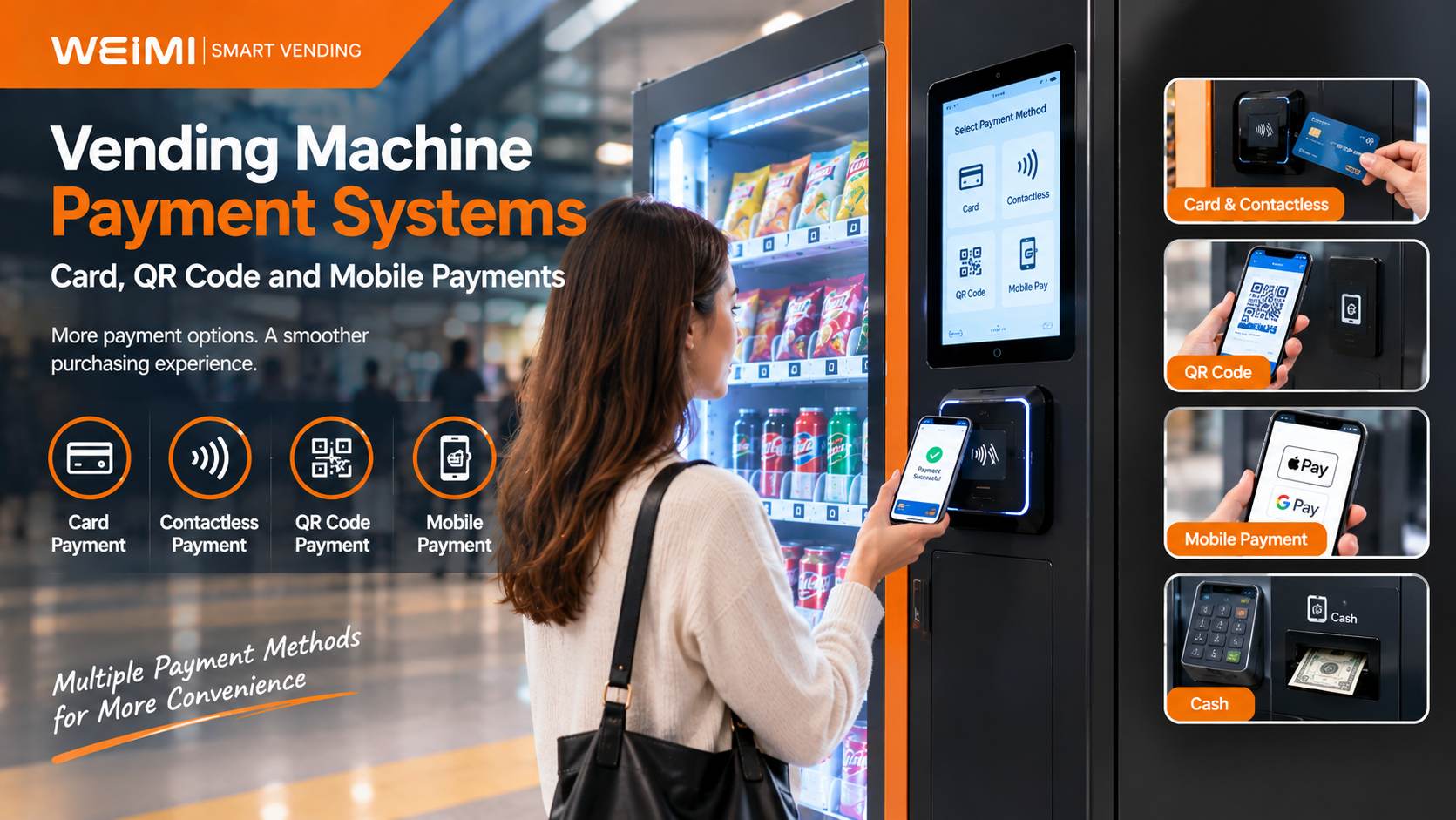
Learn about card, contactless, QR code, and mobile payment options for modern vending machines and how to choose between them.
Vending Machine Payment Systems: Card, QR Code and Mobile Payments

Learn how to choose a vending machine based on your products, location, capacity, payment options, and daily operating needs.
How to Choose the Right Vending Machine for Your Business

