How to Choose the Right Vending Machine for Your Business

But once you start comparing them, you will find differences in capacity, cooling systems, payment methods, product delivery, software, and other features.
For a new operator, this can make the buying process confusing.
The easiest way to narrow down the options is to start with the business requirements, rather than the machine itself.
Start With the Products
The first question should be: What do you want to sell?
If you sell bottled drinks, you may need a refrigerated machine with suitable product channels.
If you sell fresh meals, the machine may need stronger temperature management and an appropriate storage layout.
If you sell flowers, the internal space and cooling system need to be designed for a completely different type of product.
The product should therefore influence the machine you choose.
Consider the Location
The location also affects the decision.
A machine installed in a small office does not have the same requirements as one in a railway station.
Think about:
- Customer traffic
- Available floor space
- Indoor or outdoor installation
- Opening hours
- Electricity
- Internet connection
- Security
- Restocking access
For a busy location, larger capacity may be useful. For a small location, a compact machine may be more practical.
How Much Capacity Do You Need?
More capacity sounds attractive, but bigger is not always better.
If sales are relatively low, a very large machine may simply contain products that take a long time to sell.
On the other hand, a busy location may require more storage to reduce the frequency of restocking.
Try to estimate the expected sales volume before deciding on the size.
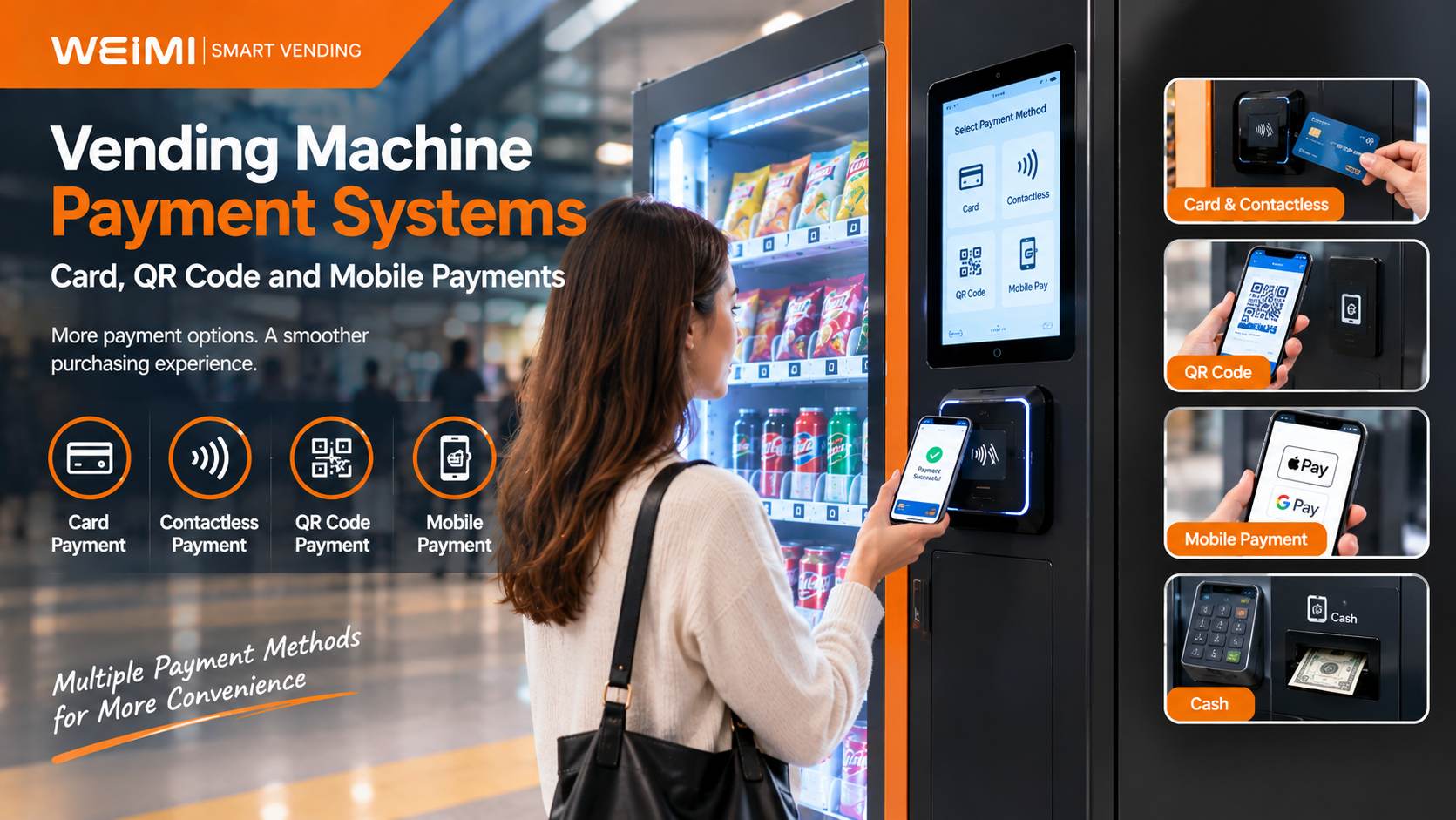
Think About Payment Methods
Customers increasingly expect convenient cashless payment.
Depending on the target market, you may want to consider:
- Bank cards
- Contactless payment
- QR code payment
- Mobile payment
- Cash
The available payment methods can vary between countries, so operators should check which options are commonly used by their customers.
Do You Need Remote Management?
For one machine located close to your business, manual management may be relatively simple.
But if you plan to operate several machines, remote management can become much more useful.
A smart system can allow operators to check sales, inventory, machine status, and other information without visiting every location.
This can save time, especially when machines are spread across different areas.
Don't Forget Product Delivery
Another detail that is easy to overlook is how the product is delivered.
For snacks, a standard dispensing system may be sufficient.
For drinks, meals, or fragile products, operators may want to consider a more controlled delivery method, such as an elevator system.
A middle pickup port can also make product collection more convenient because customers do not have to bend down to retrieve their purchase.
Consider Future Expansion
Your first machine may not be your last.
If you plan to expand later, it can be useful to consider whether the supplier provides a management system that can support multiple machines.
It is also worth checking warranty terms, spare parts availability, software updates, and technical support before making a purchase.
Conclusion
Choosing a vending machine does not need to be complicated.
Start with four basic questions:
What will you sell? Where will you place the machine? How much product do you need to store? And how do you want to manage it?
Once these requirements are clear, it becomes much easier to compare different machines and configurations.
Vending Machine Payment Systems: Card, QR Code and Mobile Payments
What Can You Sell in a Vending Machine? Product Ideas for Different Locations
Related Article