
Vending Machine Payment Systems: Card, QR Code and Mobile Payments
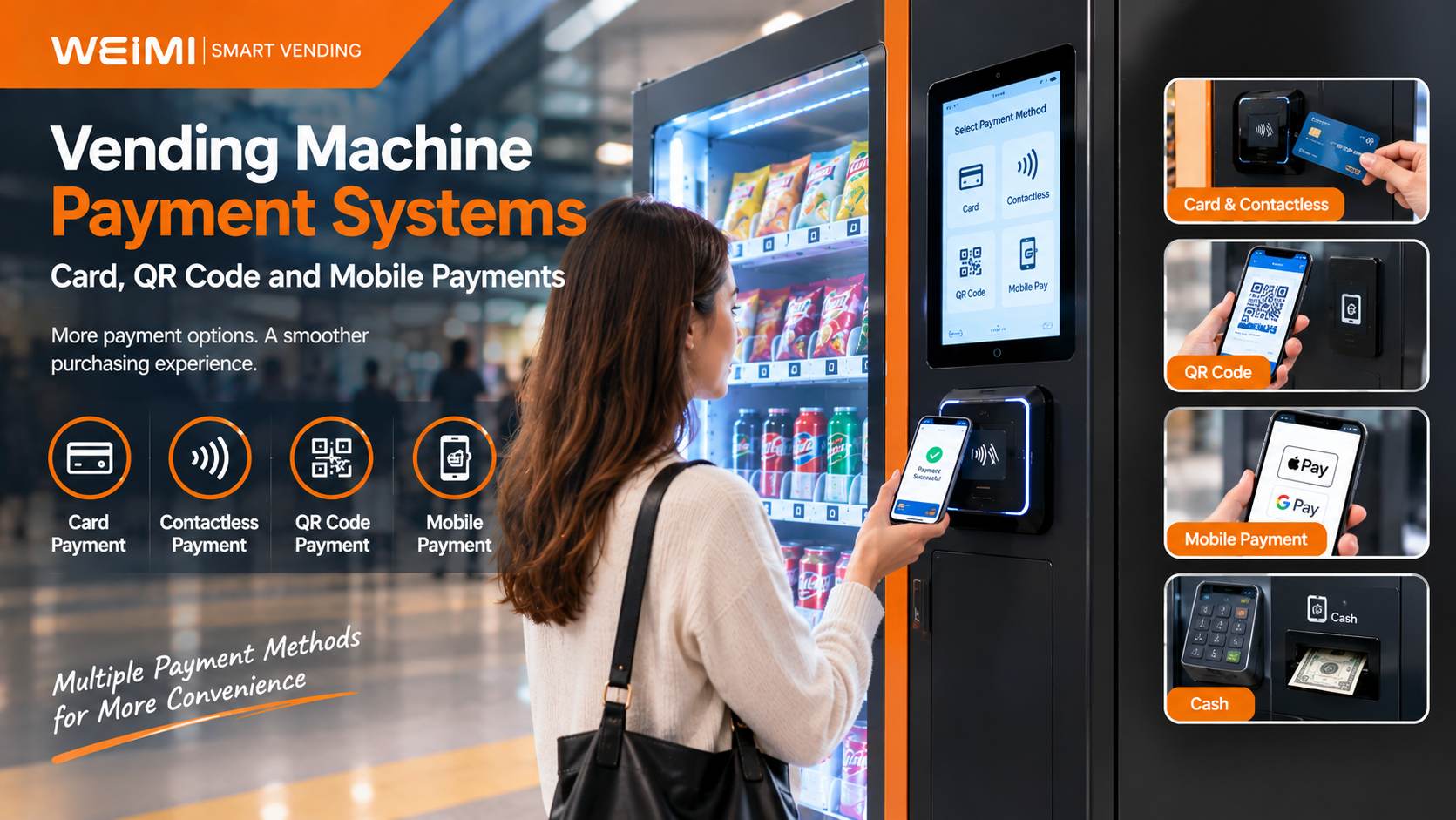
Customers may like the products inside the machine, but if they cannot pay in a convenient way, they may simply walk away.
Traditional vending machines often relied on coins and cash. Today, operators have many more options, including bank cards, contactless payments, QR codes, and mobile payments.
Why Cashless Payment Matters
Many customers now expect to pay without carrying cash.
This is especially noticeable in places such as airports, railway stations, shopping centers, offices, and other modern commercial environments.
Adding cashless payment can make the purchase process faster and more convenient.
It can also allow operators to sell products in locations where cash is not commonly used.
Card and Contactless Payments
Card readers are widely used in modern vending machines.
Customers can insert or tap a bank card, depending on the payment terminal.
Contactless payment can be particularly convenient for small purchases because customers can complete the payment without handling cash or entering a large amount of information.
For operators targeting international customers, card payment can also be useful because visitors may not have local cash.
QR Code Payments
QR code payment provides another option.
Depending on the market, customers can scan a QR code using a mobile payment app and complete the transaction through their phone.
QR payment can be particularly relevant in markets where mobile payments are already common.
However, operators should select payment methods based on the country and target customers rather than simply adding every available option.
Mobile Payments
Mobile wallets can also be connected with vending payment systems.
Customers can use their phones or smart devices to complete a purchase, depending on the supported payment platform.
For many consumers, this can make vending feel similar to other digital shopping experiences they already use every day.
Should a Vending Machine Support Multiple Payment Methods?
For some locations, supporting more than one payment method can be useful.
For example, a machine may support card, contactless, QR code, and mobile payment at the same time.
This gives customers more choices.
However, operators should also consider the cost and technical requirements of each payment method. Some payment services may involve transaction fees or require specific local agreements.
Payment Is Only One Part of the System
A payment terminal does not operate independently.
It needs to communicate with the vending machine so that the selected product is released only after the transaction is properly processed.
For smart vending machines, payment information can also be connected with sales records and remote management.
This allows operators to monitor transactions and understand which products are being purchased.
What Should Operators Check?
Before choosing a payment system, operators should check:
- Which payment methods customers commonly use
- Whether the system works in the target country
- Transaction fees
- Internet or network requirements
- Hardware compatibility
- Refund procedures
- Technical support
- Integration with the vending machine software
These details can be more important than simply choosing the payment terminal with the most features.
Conclusion
Modern vending machines can support many different payment methods, from traditional cash to cards, contactless payments, QR codes, and mobile wallets.
There is no single payment solution that fits every vending business.
The right choice depends on the target market, customer habits, machine type, transaction costs, and local payment infrastructure.
For operators, the goal is simple: make payment easy for customers while keeping the system practical to manage.
How to Choose the Right Vending Machine for Your Business
Related Article


