
How Meal Vending Machines Are Reducing School Food Queues in Singapore
2026-04-13
Why Are Students Willing to Queue for a Vending Machine?
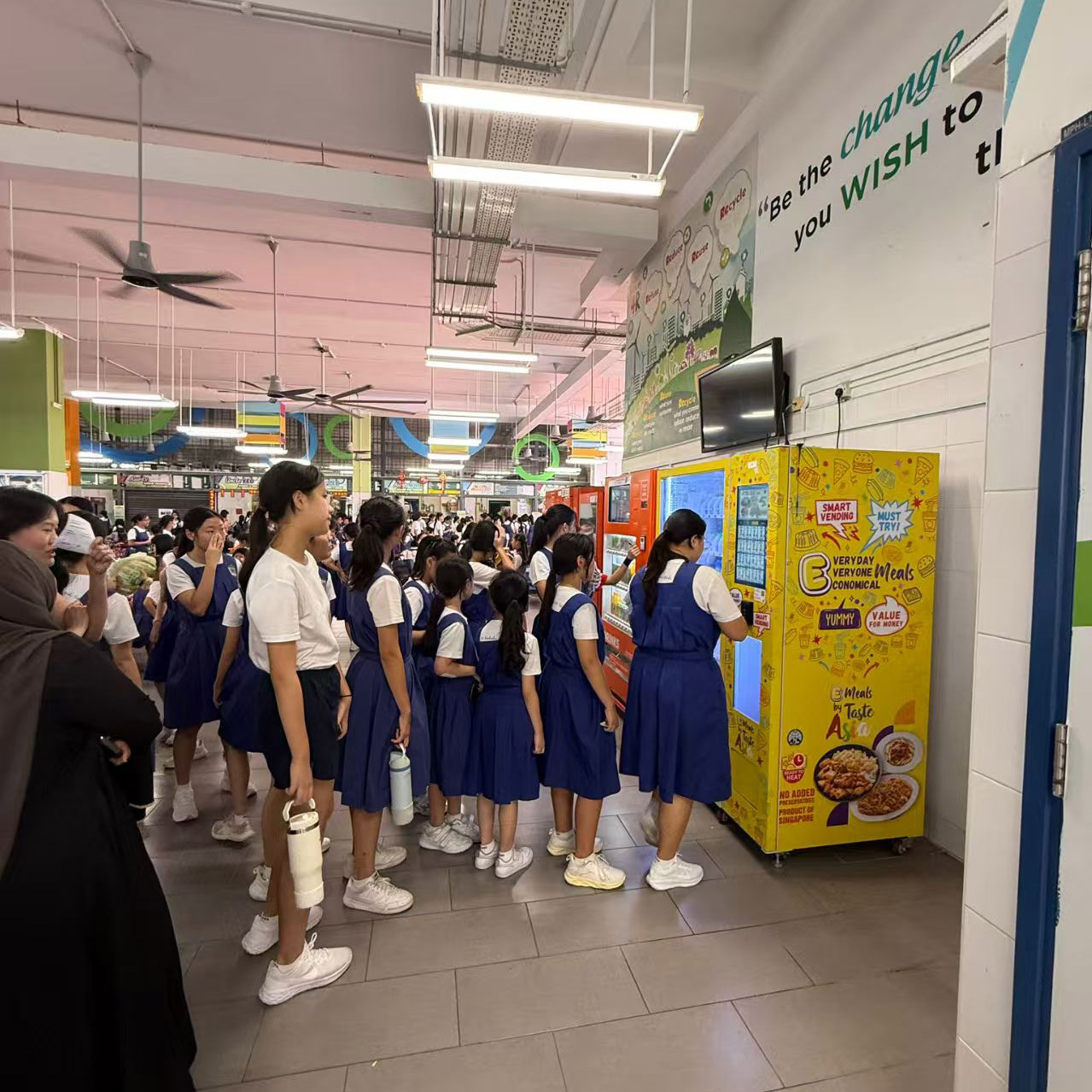
In one school in Singapore, something interesting is happening during lunch hours.
Instead of heading straight to the cafeteria, students are lining up in front of a meal vending machine—waiting patiently to make a purchase.
Instead of heading straight to the cafeteria, students are lining up in front of a meal vending machine—waiting patiently to make a purchase.
This isn’t random behavior.
Students are choosing this option because it works better for them.
Students are choosing this option because it works better for them.
The question for operators is simple:
what makes a vending machine compete with a traditional food counter—and win?
what makes a vending machine compete with a traditional food counter—and win?
The Real Problem Schools Face (That Many Operators Overlook)
For most school canteens or food service providers, the challenge isn’t demand—it’s how to handle it.
Where Sales Are Being Lost
-
Peak hours create long queues
-
Staff struggle to keep up with order volume
-
Limited counters slow down service
-
Some students give up due to waiting time
In this situation, demand already exists.
But without an efficient way to distribute meals, potential sales are lost every day.
But without an efficient way to distribute meals, potential sales are lost every day.
What Changed After Introducing a Meal Vending Machine?
In this Singapore case, the vending machine didn’t replace the cafeteria—it supported it.
Before vs. After: What Actually Improved
Before:
-
Crowded food stalls
-
Slow order processing
-
High pressure on staff
After:
-
Students purchase meals directly from the machine
-
Queue pressure shifts away from counters
-
Food service continues even during busy periods
The result is not just convenience—it’s better flow during peak hours.
Why This Model Works for Meal Sales (Not Just Snacks)
Many people associate vending machines with snacks or drinks.
But meals are a completely different category.
But meals are a completely different category.
What Makes Meals More Suitable for Vending
-
Higher value per transaction
-
Part of daily routine consumption
-
Predictable and repeatable demand
In environments like schools, a meal vending machine captures real demand—not just impulse purchases.
Key Advantages of a Meal Vending Machine Solution
1. Handles Peak-Time Demand Without Adding Staff
During lunch rush, the machine acts as an extra service point—no hiring or scheduling required.
2. Faster Decision-Making with Clear Display
Students can quickly view options and make decisions, keeping the line moving efficiently.
3. Designed for Ready-to-Eat or Hot Meals
Unlike traditional machines, it supports actual meal distribution, not just packaged snacks.
4. Low Stock Alerts to Avoid Missed Sales
The system sends reminders when inventory runs low, helping operators restock in time.
5. Flexible Placement Expands Selling Space
Machines can be installed in corridors, near canteens, or entrances—bringing food closer to students.
Who Can Benefit from This Model?
This setup is not limited to schools. It creates opportunities for:
Applicable Business Scenarios
-
School canteen operators
-
Catering companies
-
Central kitchen suppliers
-
Food brands entering campus markets
-
Hospitals and office food service providers
Any environment with predictable meal demand and limited service capacity can benefit.
Is It Difficult to Operate a Meal Vending Machine Business?
One common concern is operational complexity.
How the Operation Actually Works
-
Meals are prepared in advance
-
Staff restock the machine periodically
-
The system monitors inventory status
-
No full-time on-site operator is required
This makes it suitable even for teams without technical experience.
Why Do Students Prefer the Machine?
The behavior seen in Singapore is not accidental.
What Drives Student Choice
-
Faster and more predictable process
-
Clear product visibility
-
Self-service without counter delays
Even when there is a queue, the process feels more efficient and controlled.
A Practical Way to Add Revenue Without Changing Your Existing Setup
For most operators, flexibility is the biggest advantage.
No Need for Major Changes
You don’t need to:
-
Redesign your kitchen
-
Replace your current staff
-
Change your existing sales model
The vending machine simply adds a new sales channel alongside your current setup.
Final Thought: When Demand Is Visible, Opportunity Is Already There
When students are willing to line up for a vending machine, it sends a clear signal:
the demand already exists.
the demand already exists.
The real question is not whether this model works—
but whether your current setup is capturing all the sales it could.
but whether your current setup is capturing all the sales it could.
A meal vending machine doesn’t create demand.
It helps you serve it more efficiently—and turn it into consistent revenue.
It helps you serve it more efficiently—and turn it into consistent revenue.
Smart Vending in Hospitality: WEIMI & El Gato Vending on the Costa del Sol
Outdoor Snack Vending Machines in Germany: A Practical Way to Extend Selling Time
Related Article

See how a WEIMI vending machine is used to sell meals and drinks at Hong Kong West Kowloon Station.
Hong Kong Customer Case: Vending Machine at West Kowloon Station

Discover how a customer in Mongolia uses a large capacity vending machine with an elevator and middle pickup port for convenient drink sales.
Mongolia Customer Case: Large Capacity Vending Machine for Drinks

