
Italy Customer Case: Pizza and Meals Vending Machines for Self-Service Food Retail
A Self-Service Food Point With Two Distinct Offers
A quick food stop works best when customers can understand the offer before they approach the screen. This Italy customer case brings pizza and meals together in a compact installation beneath a timber-clad shelter. The supplied photograph shows a broad glass-front cabinet marked MEALS beside a second cabinet carrying a pizza-and-train illustration and the words La Stazione.
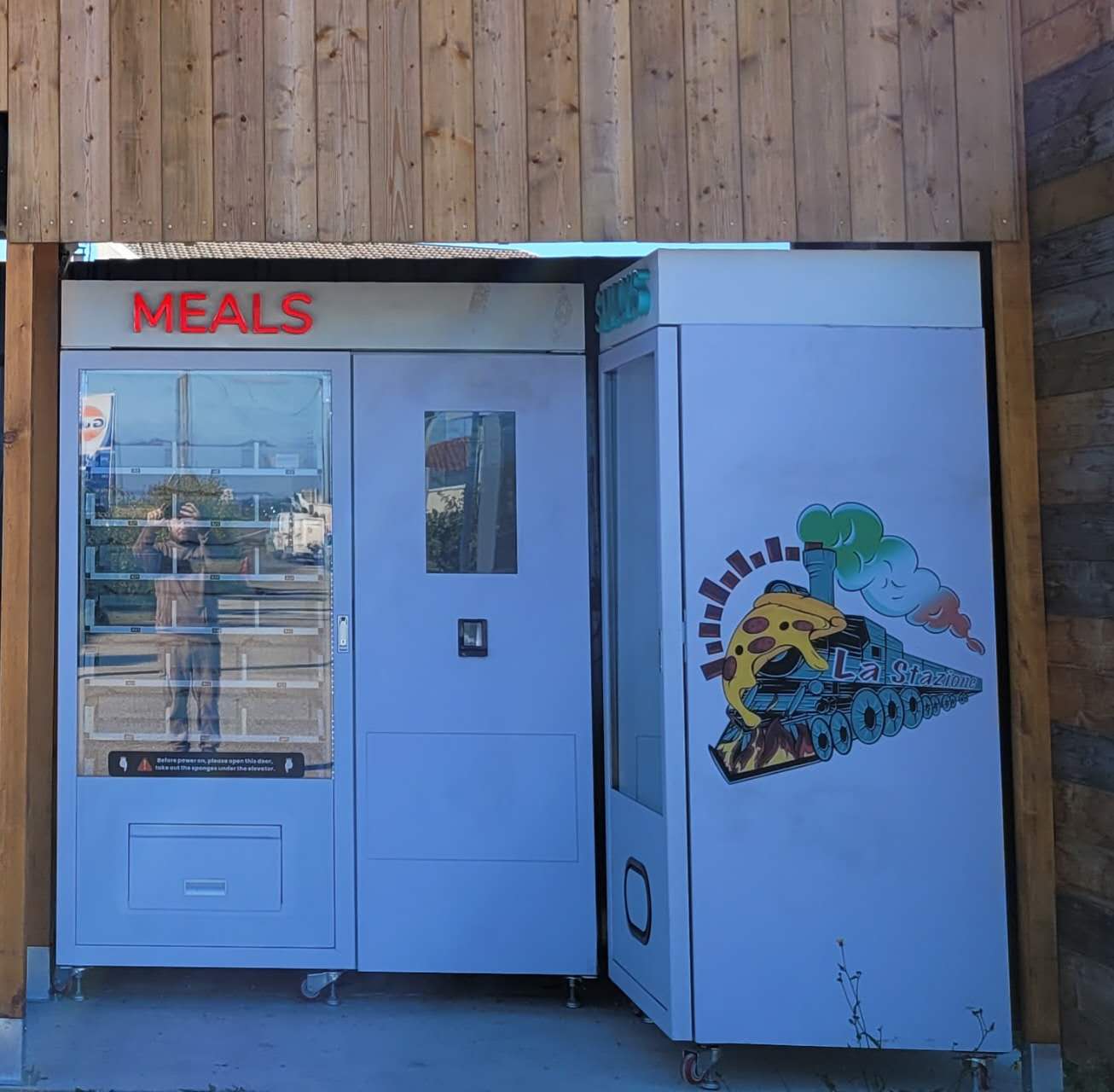
The arrangement is a useful reference for food businesses exploring an additional self-service sales point. One cabinet provides a clear view through multiple shelf levels, while the neighboring unit gives the pizza offer a recognizable identity. Together, the machines create a coordinated food destination with two visually distinct sections.
The photograph documents the physical layout and presentation. It does not establish the exact menu, city, operating hours, storage temperatures, cooking method or sales results. Those details should be confirmed for the actual installation before they are used as performance claims.
What Makes This Installation Stand Out
A Visible Meals Section
The illuminated red MEALS lettering makes the left-hand offer easy to identify. The large glass panel exposes the shelving layout and creates a direct visual connection between the customer and the cabinet interior. A collection opening sits below the display, while the adjacent vertical section contains a display area and a smaller terminal.
For an operator, this separation can help organize browsing, ordering and collection. Product labels, prices and on-screen listings should agree with the items actually loaded. A clear layout matters particularly when meals look similar in their packaging but differ in ingredients, portion size or preparation instructions.
A Recognizable Pizza Identity
The right-hand cabinet carries a colorful train motif with a pizza illustration. The La Stazione wording gives the installation a distinctive local character. The artwork provides a visible connection to the pizza category without requiring a long explanation.
Branding should support the buying journey. Customers still need to know where to select a product, which collection opening to use and whether any preparation or waiting stage applies. Exterior artwork alone does not confirm a specific oven, recipe, fresh-dough process or automatic baking capability.
Planning Pizza and Meals as One Customer Journey
Keep the Two Offers Easy to Compare
A combined point may serve a customer looking for a pizza and another seeking a different meal. A manageable opening assortment is often easier to maintain than a large menu with inconsistent availability. Choose products around the intended audience, service times and replenishment capacity, then adjust using actual transaction records and feedback.
Clarity before payment is essential: show the item name, price, portion or pack size, ingredients and relevant allergen information in an accessible form. For an Italian deployment, customer instructions should suit the local audience. Any additional languages should be selected for the real site rather than assumed from the cabinet graphics.
Explain Collection and Preparation Clearly
A typical self-service sequence begins with browsing available items, making a selection, following the configured payment prompts and collecting the correct package. If the chosen system includes heating, baking or another preparation step, its sequence and wait indication must be verified for that configuration.
Make it clear whether a product is ready to eat, requires reheating elsewhere or is intended for later consumption. The image cannot settle that question. Instructions should also explain how to retrieve an order reference and reach support if payment or collection needs attention.
Match the Equipment to the Real Food and Packaging
Test Boxes, Trays and Seals
Pizza boxes and meal trays behave differently during storage and delivery. Before confirming a machine configuration, test the actual planned packages, including their dimensions, weight, stiffness, lids and seals. Check clearance, orientation and the condition of the pack after collection.
A successful test with one empty box does not validate a full menu. Trials should use representative filled packages and the intended loading arrangement. If a supplier changes a tray, sleeve or pizza box, repeat the relevant checks before introducing it into normal service.
Define the Food Handling Plan
The food determines the storage requirements. Confirm whether each item needs chilled, frozen or another controlled storage condition, and match that requirement to the selected equipment and operating procedure. No temperature range can be verified from this photograph.
Document loading checks, expiry control, stock rotation, cleaning responsibilities and the response to a temperature or power interruption. Where monitoring or automatic sales restrictions are required, confirm the exact functions with the supplier. Food safety depends on the complete handling process, not the appearance of a closed cabinet.
Designing a Sheltered Food Vending Location
A Shelter Is Part of the Site Plan
The timber structure frames the equipment and provides a defined customer-facing area. For a similar installation, assess rain direction, direct sunlight, wind, drainage and ventilation rather than assuming a roof makes every machine suitable for outdoor use. Confirm the environmental rating and installation limits of the chosen model.
Check power capacity, grounding, network access, the supporting surface and clearance for service doors. Leave space for customers to stand and collect food, and ensure replenishment can take place without blocking the normal approach. The exact footprint and utility requirements need a site survey and equipment drawings.
Set Access Hours Honestly
Self-service equipment can support sales during the hours the location is accessible. Continuous access should only be advertised when the site, lighting, security, support and replenishment arrangements support it. This photo does not confirm a 24-hour operating schedule.
Daily Operations That Keep the Offer Consistent
Assign ownership for replenishment, cleaning, product data and customer support. At each refill, compare the physical stock with the customer-facing menu, check packaging condition and remove expired or unsuitable products according to the food handling plan. Keep both machine sections equally clear and presentable.
If the selected platform provides stock, sales or equipment-status data, use those records to plan visits and investigate exceptions. Confirm which reporting functions, alerts, connectivity charges and service arrangements are actually included. Automated selling still needs an accountable operator.
Frequently Asked Questions
Does This Photo Show Pizza Being Made From Scratch?
No. It shows the installed cabinets and pizza-themed artwork, not an internal food preparation process. Whether a system stores prepared pizza, reheats a product or uses another method must be confirmed from the model specification and demonstration.
Can the Same Setup Sell Any Prepared Meal?
Compatibility depends on the food, packaging, storage needs and delivery configuration. Prepare a product list and test actual samples. Do not treat the MEALS label as evidence that all meal types or pack formats are supported.
Plan Your Food Vending Project With WEIMI
Explore the WEIMI food vending machine range and compare the broader vending machine product selection when defining your project.
To discuss a pizza and meals installation, contact WEIMI with your food vending requirements. Include the destination country, site photos, available space, food handling needs, package samples and preferred payment methods. This creates a practical starting point for configuration, testing and a clear delivery scope.
Oman Customer Case: Phone and Electronics Vending Machine for Self-Service Retail
China Customer Case: Model Car Vending Machine for Shopping Mall Collectible Retail
Related Article


