USA Customer Case: Trading Card Vending Machine
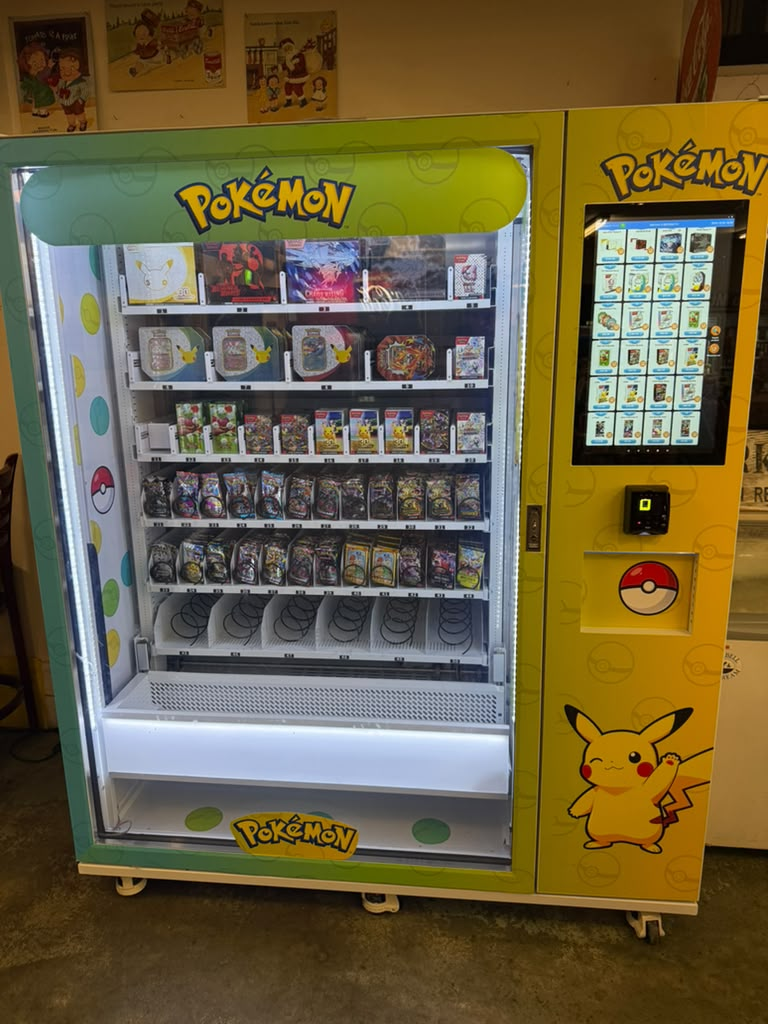
A trading card vending machine brings packaged collectibles into a self-service retail format. This USA customer case shows a glass-front machine stocked with Pokémon card products, with a touchscreen beside the display. The customer photograph offers a practical view of how different package formats can be presented in one cabinet.
For operators planning a similar project in the United States, the useful lessons begin with product visibility, package fit and a clear selection process. Below, we look at the photographed installation and the operating decisions to review before choosing a machine.
USA customer case at a glance
- Market: United States.
- Retail focus: packaged trading card products and collectibles.
- Visible layout: an illuminated glass-front cabinet, several display shelves, spiral dispensing lanes, a right-side touchscreen and a lower collection area.
- Presentation: yellow and green exterior graphics coordinated with the merchandise shown inside.
The photograph shows boxed products and smaller packs arranged across separate rows. This variety makes the case relevant to retailers who need to plan for more than one packaging format. A product that looks suitable on a shelf still needs a dispensing test before its lane configuration is approved.
What the installation shows about product presentation
A clear view of the merchandise
The transparent front lets visitors see the physical packages while browsing. Interior lighting helps separate the merchandise from the cabinet background. For collectible products, visible package artwork and format can help a buyer distinguish between items that might otherwise look similar in a short menu description.
The touchscreen displays a grid of product choices beside the cabinet. In a similar setup, operators should check that each screen listing matches the actual item, including the product name, pack format and displayed price. Updating the screen and the physical stock together helps avoid confusion when an assortment changes.
Different package formats need different lane decisions
In this customer image, larger packages occupy upper display positions while smaller items appear in several lower rows. This is a useful starting point for merchandise planning, rather than a universal loading rule. Lane width, spiral spacing and product orientation should be selected around the dimensions and behavior of each actual package.
Sealed trading card packs, tins and boxes can differ in rigidity, weight and surface friction. Operators should supply representative samples and test each format repeatedly, including when a lane is nearly empty. Confirm how the product reaches the collection area and inspect the packaging after delivery.
Planning a trading card vending machine for the USA
A customer case is most useful when it leads to a concrete preparation checklist. For a United States project, begin with the merchandise and intended venue, then confirm the equipment and service arrangements that fit those conditions.
- Build an SKU list. Record the packed dimensions, weight and photographs of every item. Identify which products need separate lanes and which packaging changes may require retesting.
- Review the location. Measure the delivery route, final position, door-opening clearance and customer pickup space. Confirm indoor environmental conditions and the venue's permitted operating hours.
- Confirm the payment arrangement. Ask for written confirmation of the terminal, acquiring service, currency, connectivity and recurring charges for the destination. A photograph alone does not establish which payment services are active.
- Plan customer support. Provide a visible contact method and a process for a payment or collection problem. Assign responsibility for refunds and transaction reconciliation.
- Agree on acceptance tests. Check screen-to-lane mapping, displayed prices, successful delivery and the documented response to an interrupted transaction before opening to customers.
Keeping the assortment accurate after launch
Trading card ranges can change as stock arrives or product lines rotate. A consistent refill routine should connect the package in each lane with its screen entry. Record the lane position, product identifier, selling price and refill quantity, and check that no previous product remains behind a newly loaded item.
Inspect the display and collection area during each service visit. Remove damaged packaging from sale and keep the customer-facing glass and screen clean. Set refill frequency using observed demand and available stock; the number of shelves in a photograph does not establish sales volume or the right service interval.
When comparing equipment, review which inventory and transaction records are included in the proposed configuration. Ask for a demonstration of the relevant functions rather than assuming that every machine has the same reporting or remote management features.
Frequently asked questions
Can one machine sell packs, tins and boxed collectibles?
A mixed assortment needs a lane plan and dispensing tests for the actual packages. This installation shows several package formats on display, but compatibility for another product should be confirmed using samples.
Does a trading card vending machine have to operate 24/7?
Access depends on the venue and its operating rules. An indoor machine may be available only while the building is open. Confirm access, supervision and service arrangements for the intended location.
What information is needed for a similar project?
Prepare your destination in the United States, venue type, product samples or packed dimensions, planned assortment, payment requirements and quantity. These details support a configuration discussion grounded in the products you intend to sell.
Discuss your collectible retail project with WEIMI
This USA installation illustrates a practical way to combine a visible assortment with touchscreen selection. For your own project, start with package testing and location planning. Explore WEIMI vending machines, read our vending payment system planning guide, or contact WEIMI about a USA trading card vending project with your product and site requirements.
Hong Kong Customer Case: Vending Machine at West Kowloon Station
Related Article