Pet Supplies Vending Machine Buying Guide: Products, Locations and Costs
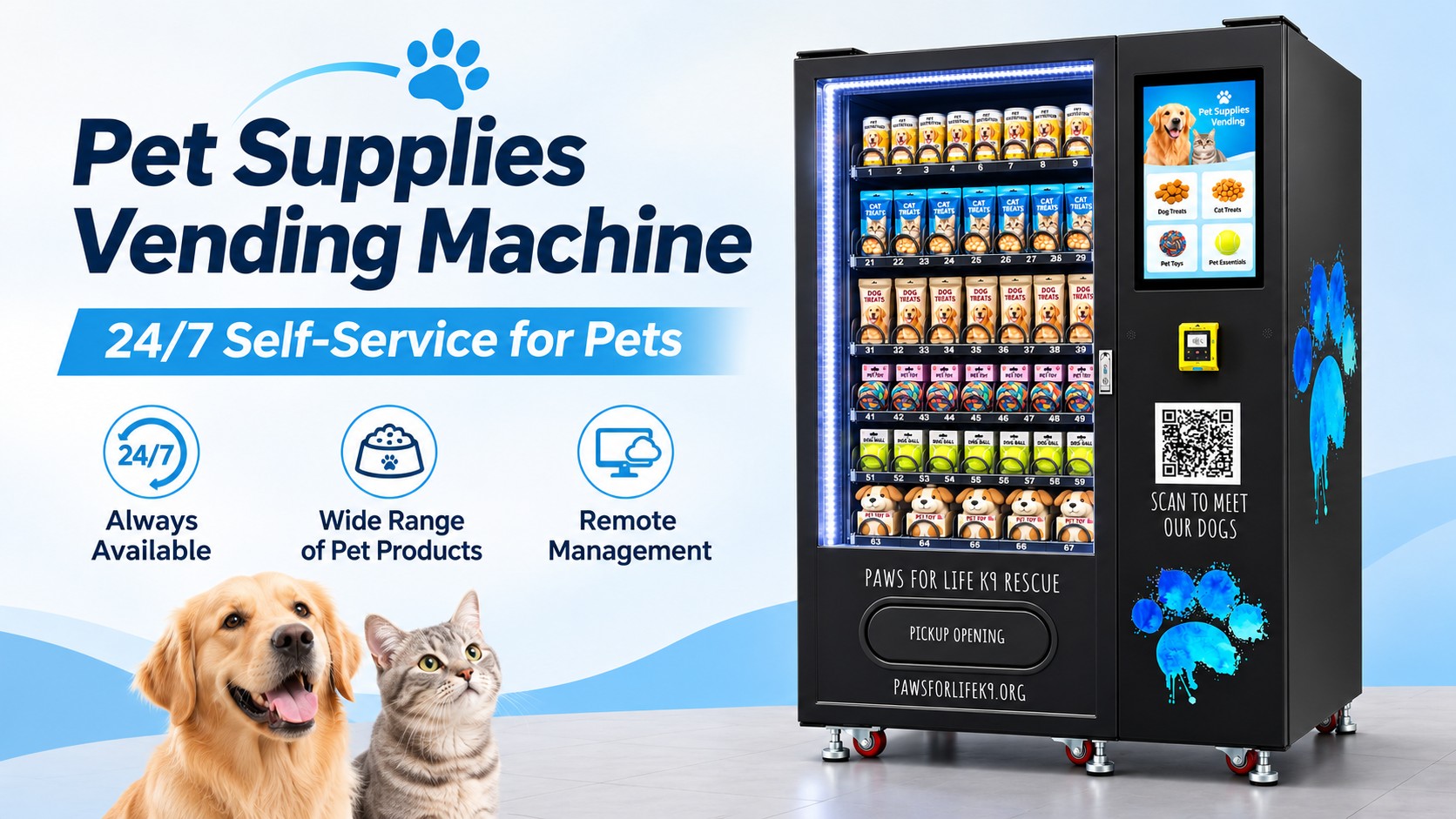
A pet supplies vending machine can sell sealed treats, small toys and everyday pet essentials through self-service retail. For a pet shop, grooming business, property manager or vending operator, the buying decision starts with three questions: will customers need these products at this location, will the packages dispense reliably, and can the site support regular replenishment and customer service?
If you are looking for a pet vending machine for sale, compare the complete operating setup rather than the cabinet alone. This guide explains what to stock, where to place it, what to test and which costs to include in a quotation.
What Can a Pet Supplies Vending Machine Sell?
Start with a small range of products that solve a clear need. A dog owner who forgot waste bags and a shopper buying a gift for a cat are making different purchases. Match the assortment to the people who actually use the site.
- Sealed dog and cat treats: choose clearly labeled retail packs with appropriate shelf life and storage instructions.
- Small toys: packaged balls and compact toys may suit impulse purchases, subject to size, weight and dispensing tests.
- Walk-time essentials: waste-bag rolls and other compact accessories can address an immediate need near pet activity areas.
- Pet-care products: travel-size wipes or grooming items may suit a grooming or wash location; check leak resistance, labeling and handling requirements.
This format is for packaged merchandise. Loose-food portion dispensing is a different equipment requirement. Fresh, raw or other temperature-sensitive pet food also needs a separately verified storage and cooling solution. A glass-front cabinet does not establish refrigeration or suitability for those products.
Where Should You Place a Pet Product Vending Machine?
Useful locations combine relevant customers with a reason to buy and practical access. High general foot traffic alone is insufficient. Check whether people bring pets, how long they stay and what they cannot already buy conveniently nearby.
- Pet shops and grooming businesses: consider after-hours essentials or a focused selection near a collection area. Confirm access outside staffed hours.
- Dog-wash sites: evaluate items customers need before or after a wash, while keeping the installation clear of splashing and wet handling areas.
- Pet-friendly residential buildings and hotels: assess demand for forgotten essentials, property permission and responsibility for refunds and support.
- Shopping centres and pet activity venues: review customer relevance, rent or commission, security and the replenishment route before committing.
A machine is only available 24/7 if customers can reach it 24/7. For a park, pavement or other exposed location, confirm the exact cabinet's outdoor suitability, shelter, ambient operating limits and installation requirements in writing. Promotional artwork is not evidence of weather protection.
How Do You Know the Products Will Dispense Reliably?
Send the supplier your actual retail packages, or provide full dimensions, weight and clear photographs before selecting the dispensing layout. A thin treat pouch, a rigid container and a round toy can behave differently in the same lane. Nominal cabinet capacity does not tell you how many of your own products it can hold.
- List each proposed product and measure its complete package, including hang tabs and flexible edges.
- Ask the supplier to recommend the lane, coil or alternative dispensing arrangement for each package.
- Request repeated vend tests with representative samples, including near-empty lanes and different loading positions.
- Check the collection opening for easy retrieval and inspect products for crushing, tearing, leakage or snagging.
- Confirm the procedure for a failed vend, including detection, customer messaging, refund handling and operator response.
Ask for a layout showing the usable lanes and estimated capacity for your assortment. If bulky or fragile products require another format, compare that configuration before purchasing. Do not assume every product shown in an illustration fits one standard machine.
Which Payment and Remote Management Functions Matter?
For payments, specify the destination country and the methods your customers use. Confirm the terminal, local provider, merchant account, settlement currency, connectivity and recurring charges. A card-reader image does not prove support for a particular payment network or local QR service.
Request a demonstration of the proposed purchase flow: selecting an item, seeing its price, paying, collecting the product and getting help if something goes wrong. Labels should make the intended animal, pack size and product identity clear.
For remote management, ask which functions are included in the quoted configuration: sales reporting, stock estimates, low-stock alerts, price updates or fault notifications. Clarify software fees, user access and what happens during a network outage. Stock records help plan visits, but staff still need to inspect package condition, expiry dates and the physical machine.
How Much Does a Pet Supplies Vending Machine Cost?
There is no single useful price without a defined configuration and delivery scope. Compare quotations for the same product layout, payment setup and destination. Separate the machine purchase from the costs of operating the location.
- Equipment and options: cabinet, dispensing configuration, screen, payment hardware, branding and any verified environmental protection.
- Delivery and setup: freight, insurance, applicable duties and taxes, unloading, installation, electrical work and commissioning.
- Recurring operation: payment processing, connectivity, software, electricity, rent or revenue share, restocking labour and service.
- Inventory and support: initial stock, expired or damaged merchandise, spare parts, warranty scope and customer refunds.
To assess viability, estimate monthly sales using evidence from your site. Subtract merchandise cost and transaction fees to find contribution per sale, then compare the total with monthly operating costs. Include replenishment travel and labour. Foot traffic, a broad product range or unattended operation does not guarantee profit.
Frequently Asked Questions Before Ordering
Can one machine sell dog and cat products together?
Potentially, if each package suits the chosen dispensing layout. Separate and label the products clearly, and test the full assortment rather than approving the machine with only one sample.
Does pet food always need a refrigerated machine?
Follow the product manufacturer's storage instructions. Shelf-stable sealed treats and temperature-sensitive food have different needs. Confirm the site's heat and sunlight exposure as well as the equipment's operating limits.
How often does it need restocking?
That depends on sales, usable capacity, shelf life and the number of products offered. Start with a manageable range, record sales and stockouts, and adjust the visit schedule using actual demand.
Can it replace a staffed pet shop?
It can provide self-service access to selected items, but it still needs stocking, cleaning, maintenance and customer support. Products that require advice or special handling may be better served through staffed retail.
Request a Quote Based on Your Products and Site
Prepare your destination country, installation photographs, available space, indoor or outdoor conditions, operating hours and preferred payment methods. Add a product list with package dimensions and weights, expected quantities, branding needs and the team responsible for restocking.
Explore the WEIMI pet vending machine range and the pet products vending machine for packaged food and toys. Then contact WEIMI with your product and location requirements to request a configuration-specific quotation and sample dispensing test.
Instant Noodle Vending Machine Buying Guide: Hot Water, Costs and Setup
Refrigerated Flower Locker Vending Machines for Fresh Bouquet Sales
Related Article